Zillow Push Pre-Permission Prompt: driving 200,000 weekly visits by ensuring buyers never miss a listing

Lead Product Designer (Growth & Product Communications)•Zillow•iOS / Android
Project summary

Transforming a cold system dialog into high-intent engagement when it matters most

The problem

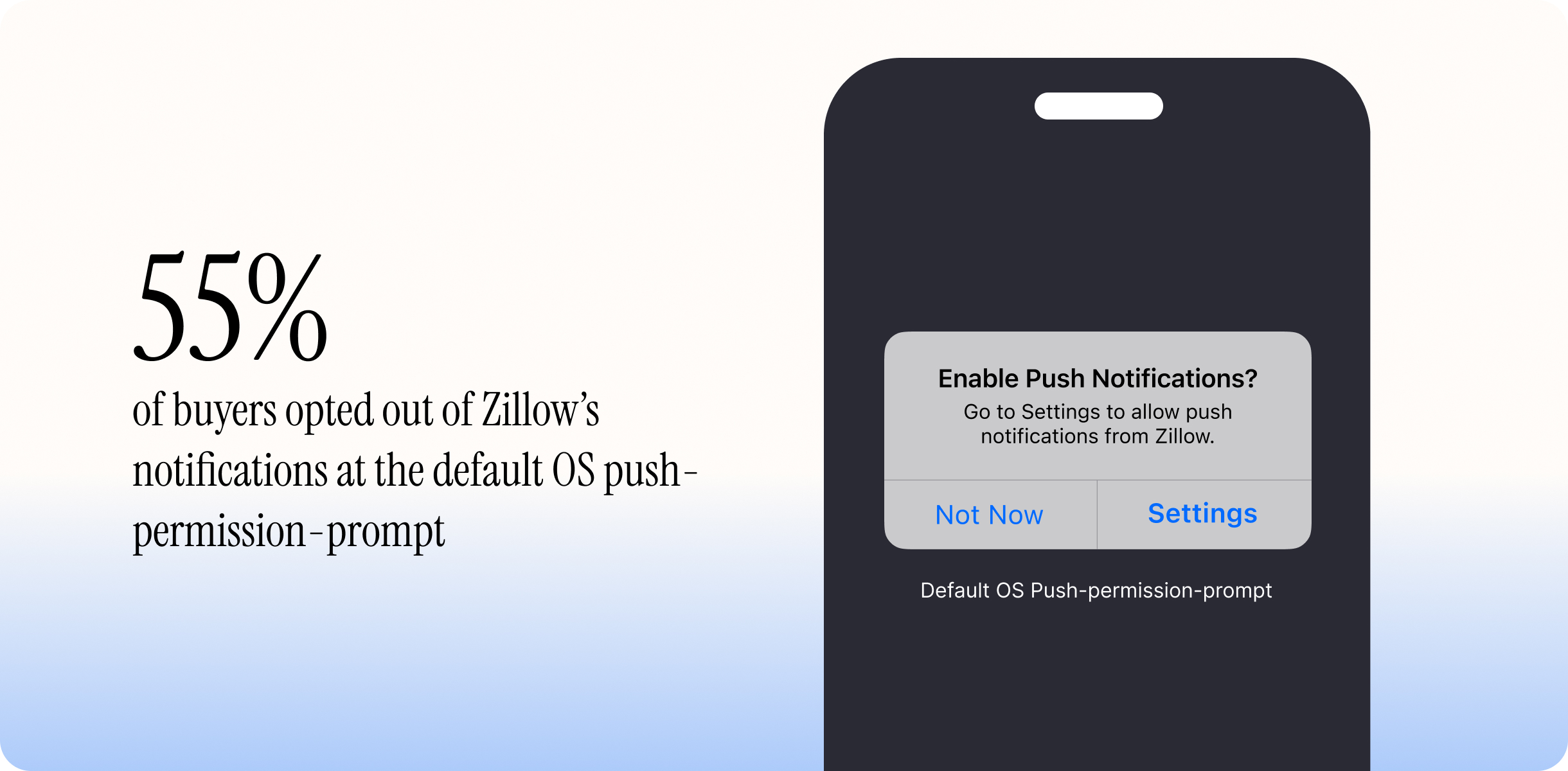
Trapped in two years of low-impact email A/B testing with zero mobile engineers, our team deprioritized push notifications while 55% of buyers opted out on the system default prompt at first launch.

The outcome

I used a comprehensive comms audit to convince leadership to invest in push, secured mobile engineering headcount, and launched contextual prompts that drove 50,000 weekly push subscribers and +200,000 weekly app visits.

Context

Unlocking push notifications as a growth channel without compromising buyer trust

The organizational blocker

When I joined, the team had been stuck running low-impact email A/B tests for two years. Because we lacked mobile engineers, push notifications were completely deprioritized.

The turning point

Two years into my role, I conducted a comprehensive comms audit revealing that 55% of buyers declined push immediately at launch, abandoning a massive audience. I used the data to build the business case for leadership, successfully securing dedicated mobile engineering headcount to unlock push as a brand-new growth channel.

The goal & challenge

Prove the value of this new channel by converting high-intent buyers into push subscribers without burning trust or spamming users.
Context visualization
Synthesis

Proving value during moments of high intent instead of asking on day one

The problem

Once a buyer tapped “Don’t Allow” on iOS or Android, the app never asked again. Re-subscribing required digging through phone settings, creating a permanent dead end.

The insights

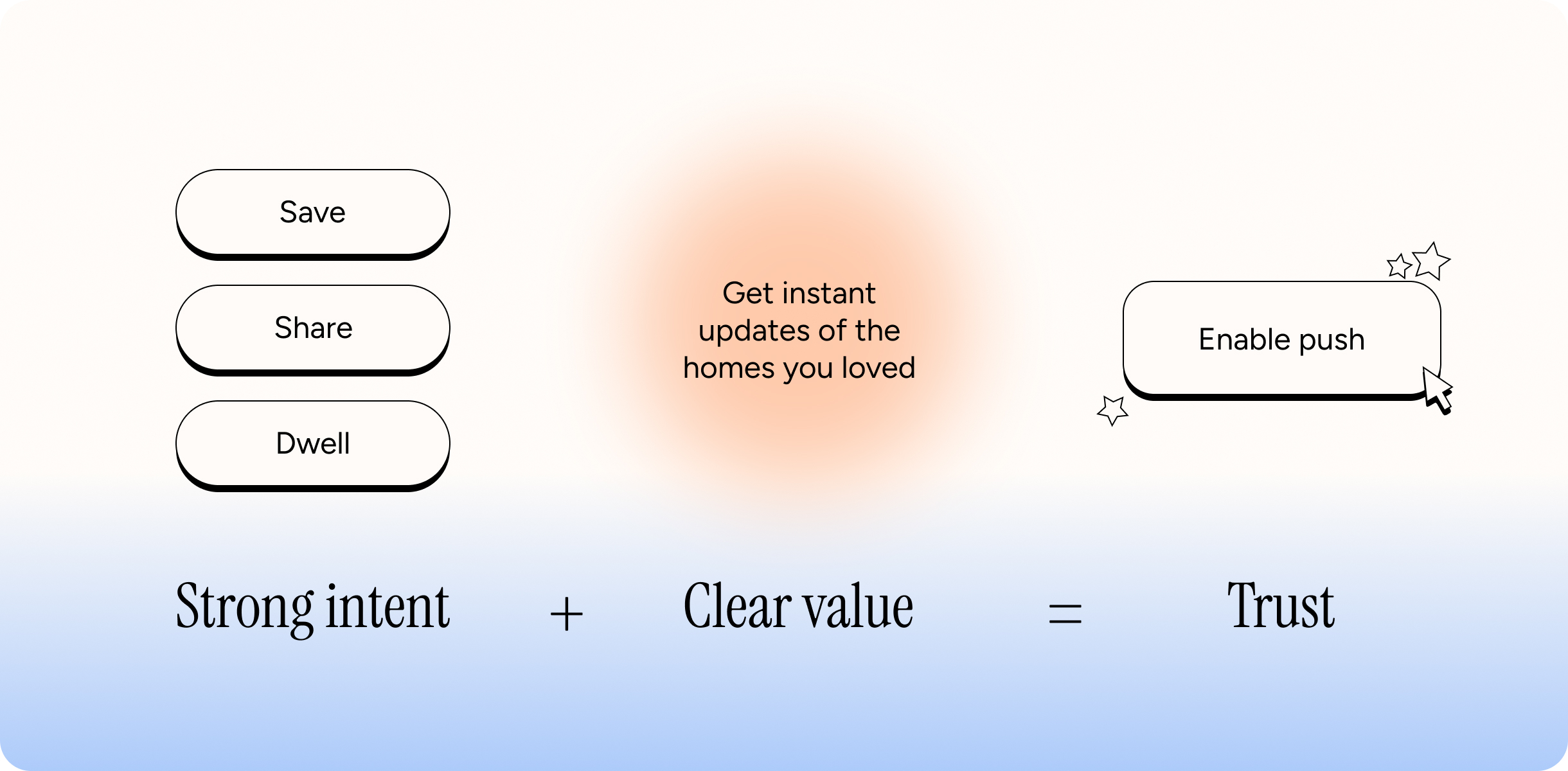
I identified that buyer willingness to receive alerts peaks during high-intent actions (saving a home, sharing a listing, or dwelling on property details) rather than at launch.

The hypothesis

I hypothesized that demonstrating how real-time alerts help buyers win their home at the exact moment of interest would convert lost users into active subscribers.

Synthesis visualization
The solution

Intercepting high-intent actions with clear value before triggering the system dialog

Strategy & experiment design

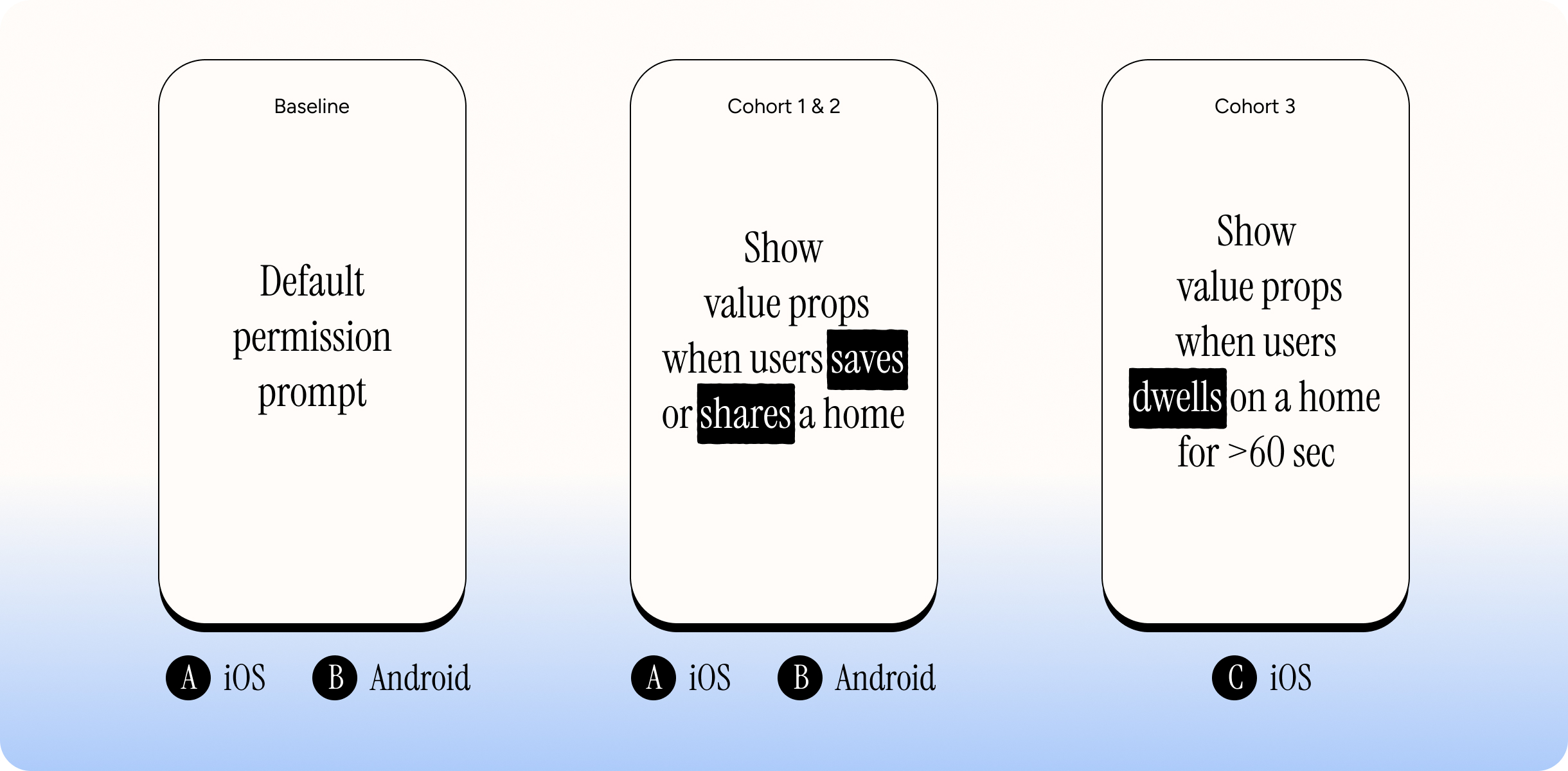
I recognized that asking cold for permissions was costing us over half our potential audience. Instead of a generic prompt, I designed a re-engagement flow triggered by three intent signals: saving a listing, sharing a home, and dwelling on a property page. To respect user boundaries, I implemented a strict 30-day global cooldown whenever someone dismissed the prompt.

Solution visualization

Save home trigger

Instead of hoping users would randomly opt in, I designed the prompt to appear only after they tapped the heart icon. This briefly paused their journey to show exactly how notifications would help them win that specific home.

If they declined, the cooldown kicked in so they could keep browsing without breaking their flow.

Share home trigger

When a user shared a listing with a co-buyer, I capitalized on that natural collaboration moment to offer real-time updates. By highlighting how alerts keep everyone in the loop on a home they clearly care about, I positioned the opt-in as a helpful tool rather than a marketing request.

Outcome & impact

50,000
New weekly subscribers

Unlocked +50,000 net additional weekly unique users receiving push alerts across iOS and Android with up to a 7.7% CTR.

+200,000
Weekly app visits

Generated +203,718 incremental weekly visits across all three contextual intent triggers.

Mobile headcount

Transformed our team from email maintenance into a modern growth engine, using audit insights to justify and secure dedicated mobile engineers.

Reusable pattern

Established Zillow's standard pre-permission flow and 30-day cooldown rules across teams.

Trade-offs

High-visibility education over subtlety

I chose a high-visibility full-screen prompt over subtle banners because educating buyers required dedicated focus. To balance this friction, I enforced a strict 30-day cooldown so users were never spammed. When engineering constraints limited scope, I prioritized iOS first to validate the mechanic on our highest-volume audience.

Reflection

Connecting business reality with user problems

When I first joined the team, I was frustrated that we were only doing low-impact email optimizations while I wanted to chase bigger wins. I made mistakes early on trying to push my own definition of impact. Over time, I learned that driving real change requires looking through the business lens first, then bridging it directly to an urgent user problem. That shift is how you build a winning case, and the pre-permission prompt was one of those breakthrough ideas. I couldn’t have done it without my product and engineering team, who made complicated business insights easy for me as a designer to access and act on.